
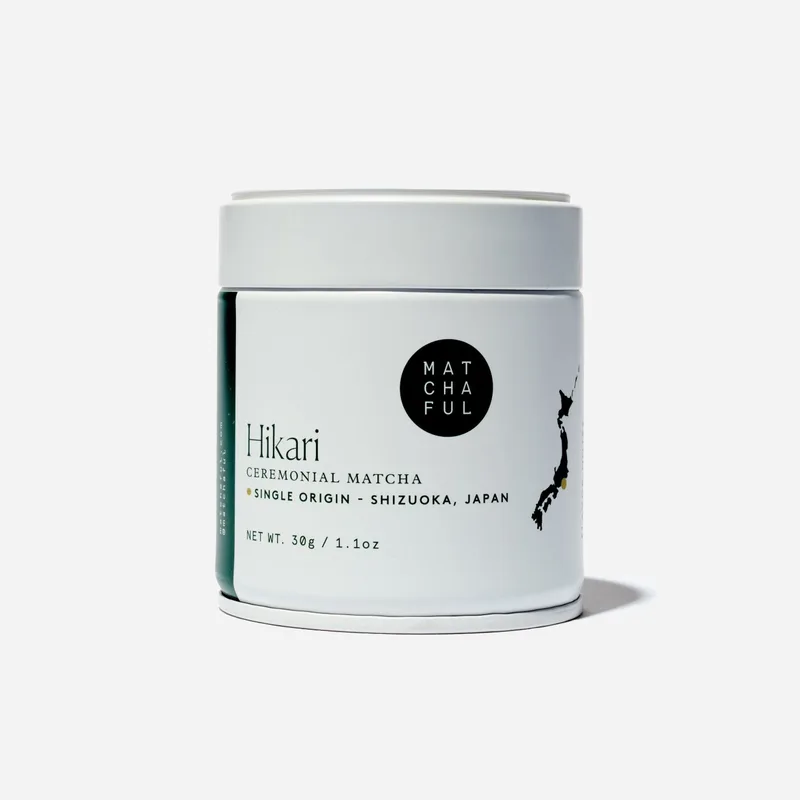
Matchaful Hikari Single Origin Matcha review
MS Rating
Community Rating
Flavor Profile
Product Details
- Brand
- Matchaful
- Origin
- Shizuoka
- Grade
- Ceremonial
- Cultivars
- Blend
- Sizes
- 30g, 100g, 1kg
- Lab Tested
- Heavy Metals, Radiation
- Description
Hikari is Matchaful's single-origin ceremonial matcha, grown on a multi-generational single estate in Shizuoka and stone-milled to order from first-harvest leaves. It carries tasting notes of walnut, lemon, and butter, with a light body and a grassy, floral edge that reviewers note can lean astringent. The leaves are grown without pesticides and shaded by solar panels.
Expert Review
No Matcha Spot Expert review yet!
Where to Buy Hikari Single Origin Matcha by Matchaful
Get it from the official producer or trusted vendors
Matchaful
Official$1.40/g
Lab Testing
Measured contaminant levels from brand and independent reports. Hover a row to learn how to read it. Lower is better.
Heavy Metals
Radiation
Figures are reported by the linked source and shown in standardized units. Matcha Spot does not independently verify lab results.
Share your experience with this matcha
Sign in to leave a reviewNo reviews yet. Be the first to review this product!
Matcha similar to Hikari Single Origin Matcha by Matchaful
River & Stone Tea Diancha "White Matcha"
Slightly less astringent, slightly more sweet, China origin
Matcha Dachi Nakayama Blend
Slightly less bitter, slightly less astringent, slightly more sweet, Yame & Kagoshima origin
Rocky's Matcha Single Cultivar Koshun
Slightly less umami, slightly less bitter, same Shizuoka origin
Rocky's Matcha Dreamin' Man Ceremonial Blend
Slightly more umami, slightly less bitter, less astringent, Kyoto origin