
Shiga Matcha
Shiga is one of the oldest tea-growing regions in Japan, but most of its matcha gets drunk under other prefectures' labels.
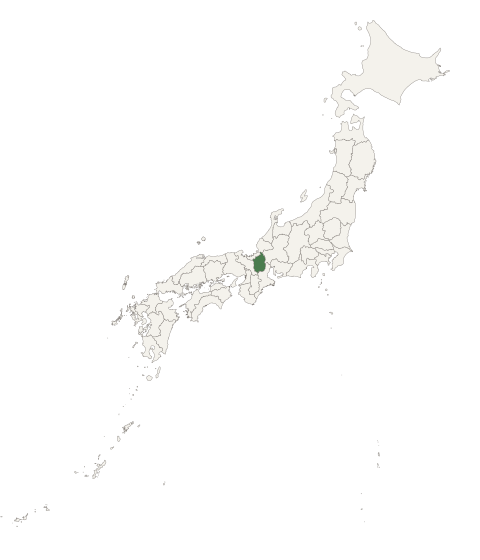
The earliest documented Japanese tea cultivation happened in Shiga, when the Tendai monk Saicho returned from Tang China in the early 9th century and planted seeds at the foot of Mount Hiei, on the western shore of Lake Biwa. The Asamiya district within Koka City is the direct heir to that lineage and is counted among Japan's "five famous teas." Asamiya tea has been served to the imperial family.
Despite the history, Shiga is a small producer by volume, and a notable share of its tencha goes into the Uji supply chain. Under Japanese trademark rules, "Uji Matcha" can be made from leaves grown in Kyoto, Mie, Nara, or Shiga, as long as the final processing happens in Kyoto. So a meaningful share of the matcha you drink under an Uji label was actually grown next door, in Shiga. That blurs Shiga's identity as a stand-alone region.
When Shiga matcha is sold as Shiga (not folded into Uji), it usually leans lighter and more aromatic, with a slightly drier finish. Kettl carries two single-origin Shiga matchas in our database (Fuyou, Kouya). Useful if you want to compare against an Asamiya-blended Uji.
Top Shiga Matcha Powders
Browse other origins